Health in the Rio Grande Valley

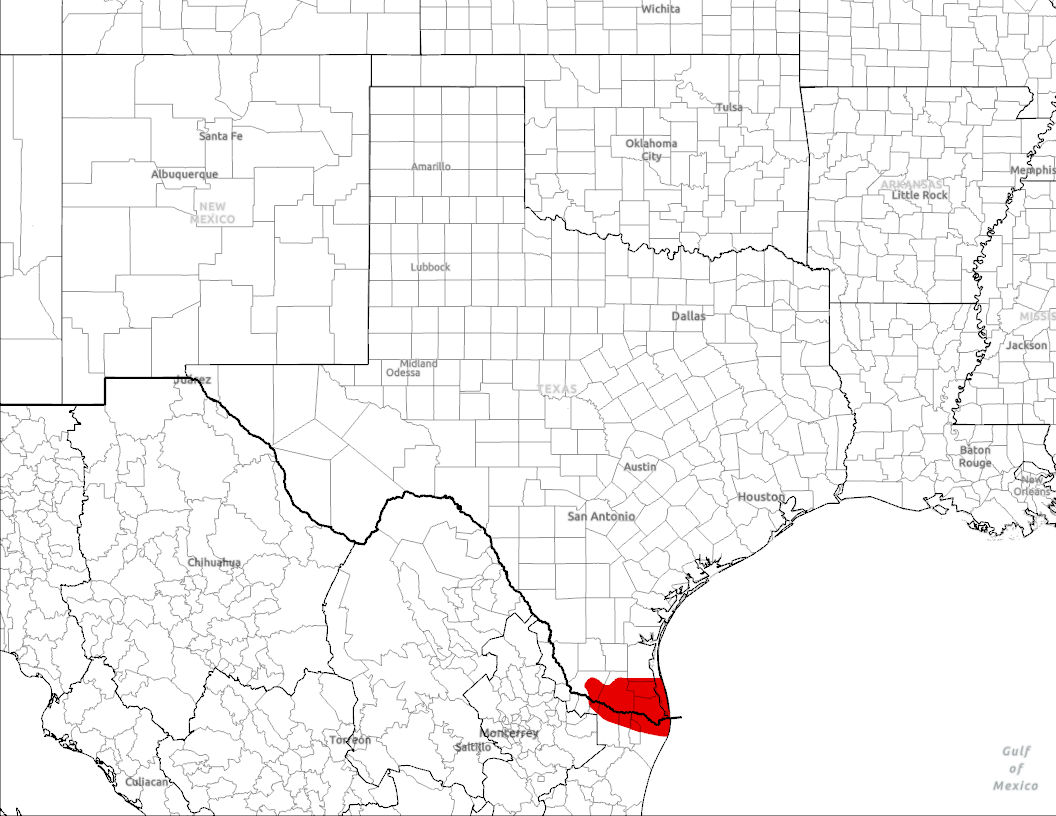
By Jmjosh90 – Own work, CC BY-SA 4.0, https://commons.wikimedia.org/w/index.php?curid=83933420

At the southernmost tip of Texas, there is a sunny and humid area called the Rio Grande Valley (aka the Valley), which is made up of Starr, Hidalgo, Willacy, and Cameron counties. Originally, the Valley was a prosperous agricultural center in the 1970s due to irrigation and railroads.1 Even today, South Padre Island brings many tourists and industry to the region to enjoy the Gulf of Mexico. Hispanic Texans “play a crucial role in the region’s labor force,” making up approximately 90% of the population, with a 10% increase in population size over the last ten years.5

Unfortunately, in the past several decades, the poverty rates began to climb, and the Valley is now “the poorest urban area in Texas.”1

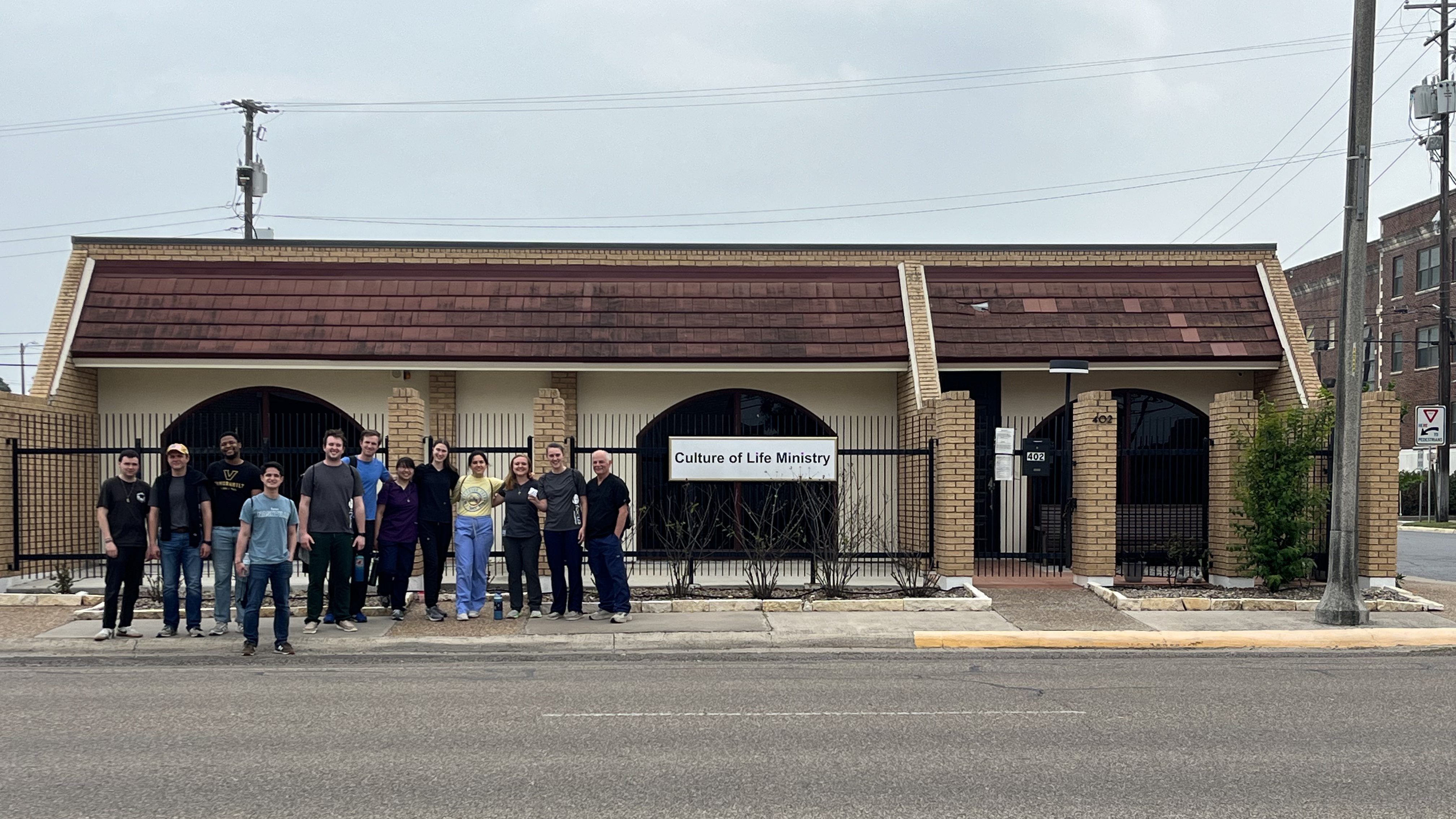
It is the first day of my medical mission trip, and I am nervous but incredibly excited to work for a week in a free clinic in Harlingen, Texas, a mere 20 minutes from the US-Mexico border. There are 14 of us who flew in from around the country, including doctors, some graduate students, and mostly pre-health college students–each bringing a different skill set to our mission in the Valley. Most of us meet for the first time at the airport, and we spend the rest of the day in a state of jetlag, getting to know each other while unpacking, stocking up on food, and preparing our makeshift sleeping space in a small church across the street from the clinic. We go to bed, excited to meet Dr. Robinson and jump into our work the next morning.

It is 7:30 in the morning when we walk across the street to the clinic. I am surprised to see that there is already a line of ten people waiting for the clinic to open at 8 am. I notice that, despite the Valley’s large Hispanic population, the patients in line are a mix of several different ethnicities. The waiting patients are cheerful, chatting with each other and some saying hello to us as we head to the volunteer entrance. After meeting Dr. Robinson, he and two other volunteers give us a quick tour of the moderately-sized clinic. I was expecting a small doctor’s office, with a few patient rooms and reception. However, I was surprised to see that, despite the narrow hallways and small rooms, the modest clinic was well-equipped with a lab, wound clinic, women’s health wing, ultrasound room, endoscopy room, and three or four general patient rooms, all tucked into the building in an orderly fashion.

Dr. Stephen Robinson, MD, founded the Culture of Life Ministries clinic in Harlingen, Texas, 14 years ago. Wanting to do something about prevalent chronic health conditions like diabetes in the Valley, Dr. Robinson started the clinic as a pop-up out of his car. The pop-up has since bloomed into a freestanding clinic in what was formerly an old law firm. As their website states, the clinic provides “free health services” to all in need and provides a comprehensive list of the services they can provide, from ultrasounds to endoscopies. The clinic runs entirely on the goodwill of private donors and donations from any capable of giving that are placed in the small collection box outside the front door.

The clinic is run by volunteers, and so many different visiting missions will come and work in the clinic throughout the year. Because of this, Dr. Robinson had no problem with efficiently organizing our large group into individual roles. I am stationed in the lab, aiding in blood draws and collecting specimens. Given the line of people waiting outside when we arrived, we had a steady stream of patients all morning. Despite working as fast as we could, the lab orders kept piling up, and we had to turn two people away from receiving bloodwork. Later in the morning, I was moved from the lab to do waiting-room hospitality. I watched in frustration as the administrator came into the waiting room and explained to the two patients why they could not be seen. I thought, “If only I had worked faster that morning,” and, “Why don’t we just squeeze them in??” But I realized that a high volume of patients is common at the clinic, and so they often have to turn away people who have been waiting all morning or afternoon.

There are many people who need access to affordable healthcare in the Valley. Several counties in the Valley are designated by the Bureau of Primary Health Care as Medically Underserved Areas (MUAs), also known as “healthcare deserts,” which are areas in which healthcare needs are not met, either due to inadequate access or due to a lack of quality provided care. These healthcare deserts are caused by many other factors. One partial cause of this in the Valley is the recent rapid population growth of the area, which has strained the healthcare resources available.2 Over the last ten years, there has been a significant increase in population size.5 Transportation is a huge issue among people in the Valley, with many families lacking reliable transportation to medical facilities. Due to the low income average in individuals and households, approximately one-third of the inhabitants are uninsured, and many providers in the area do not treat uninsured patients.3 While the uninsured could use the ER for routine medical visits without insurance, for the Hispanic majority in the area, this could potentially put undocumented family members at risk of deportation. Therefore, there is a lack of trust in the healthcare providers. The lack of access and lack of trust, when added to the other factors hindering healthcare access, lead to a population with very poor health. Obesity and diabetes rates in the Valley are higher than the Texas average and significantly higher than the national US average.4 During the COVID-19 pandemic, the Valley also had a significantly higher number of COVID-19 fatalities compared to other Texas counties.1  

Going into this trip, I was concerned about navigating language barriers. I didn’t know Spanish, and I knew a large part of the population did not speak English. While working in the lab, there were several times when we had to ask a translator on staff to explain a protocol to a patient. For example, there were several Spanish-speaking patients who did not know they were supposed to drink water before getting their blood drawn. Because they spoke little English and we spoke little Spanish, we had to ask Ernie, an administrator, to communicate this to ensure that the patient got the correct information. Beyond this, only one student in our volunteer group knew Spanish proficiently, and he was translating for most of our time in the clinic that week.

Language barriers are a frequently encountered barrier to providing healthcare in the Valley. Hispanic Texans “play a crucial role in the region’s labor force,” making up approximately 90% of the population.5 Even if a healthcare provider is relatively competent in Spanish, cultural communication barriers could erode the trust between provider and patient. For example, if a physician addresses a patient in the informal “tú” instead of the formal “usted” that is used as a sign of respect, this could lead the patient to feel belittled or not listened to.6 Thus, you have a strained doctor-patient relationship that could contribute to lower-quality patient care. To avoid this situation, many hospitals and clinics have taken the initiative to provide interpreters for Spanish and other languages. For example, the Harlingen clinic had many Spanish-speaking care providers, and all the doctors were fluent. Likewise, Driscoll Children’s Hospital in the Valley has several interpreters on staff, and it states on its website, “Understanding every aspect of medical care isn’t a luxury—it’s a right.”7

Looking back on my time in Harlingen, I had some very different expectations than what I found to be true. I went into the trip expecting to be working at a pop-up clinic and serving mostly first generation migrants, but I ended up in a well-stocked and established clinic, aiding middle to lower class patients who have lived in the area for decades or moved from another part of the United States. This challenged my assumptions about healthcare outreach and the type of person who needs free healthcare. With the rise in insurance costs and a lack of clinics in the area, many patients above the poverty line still regularly access care from free clinics.
By Noelle Shorter

References

1. Blackburn, C. C., & Sierra, L. A. (2021). Anti-immigrant rhetoric, deteriorating health access,  and COVID-19 in the Rio Grande Valley, Texas. Health security, 19(S1), S-50.

2. U.S.-Mexico Border Region Communities. MHP Salud. (2024, April 1). https://mhpsalud.org/who-we-serve/us-mexico-border-region/#:~:text=Access%20to%20Care&text=Further%2C%20many%20of%20the%20counties,Bureau%20of%20Primary%20Health%20Care.&text=And%20even%20if%20more%20health,much%20as%20the%20entire%20state.&text=Long%20distances%2C%20transportation%20problems%20and,short%20of%20comparable%20national%20averages.&text=As%20a%20result%2C%20many%20residents,across%20the%20border%20in%20Mexico.&text=The%20close%20proximity%20enables%20residents,visited%20a%20doctor%20in%20Mexico. 

3. Torres, S. (2018). Health Care Access in the Rio Grande Valley: The Specialty Care Challenge. Edinburg, Texas.

4. Castañeda, H. (2017). Is coverage enough? Persistent health disparities in marginalised Latino border communities. Journal of Ethnic and Migration Studies, 43(12), 2003–2019. https://doi.org/10.1080/1369183X.2017.1323448

5. Power of the purse: Contributions of Hispanic Americans in the Rio Grande Valley. American Immigration Council. (2024, October 8). https://www.americanimmigrationcouncil.org/research/contributions-hispanic-americans-rio-grande-valley 

6. Melo, M. A. (2011). Access to healthcare for “undocumented citizens” in the Rio Grande Valley (Order No. 1494854). Available from ProQuest Dissertations & Theses Global. (875791587). http://libproxy.clemson.edu/login?url=https://www.proquest.com/dissertations-theses/access-healthcare-undocumented-citizens-rio/docview/875791587/se-27. Interpretation Services. Driscoll Children’s Hospital. (2024, January 23). https://driscollchildrens.org/patients/services/interpretation-services/
Childbirth Behind Bars

By Noelle Shorter

You jolt out of sleep in the middle of the night with severe back pain. You feel your abdomen tightening and aching and remember, “I’m almost 9 months pregnant. I must be going into labor!” You frantically wake up your partner, grab the hospital bag you prepared 5 months ago, and rush to the hospital. There, the nurse congratulates you, realizes you are quite far along in labor, and rushes you both to a delivery room. After 2 hours of walking, stretching, breathing, and pushing, you have a beautiful baby boy. You and your partner then stay at the hospital for two days, being monitored and meeting your child, meeting a lactation consultant, and finally getting to go home as a happy family.

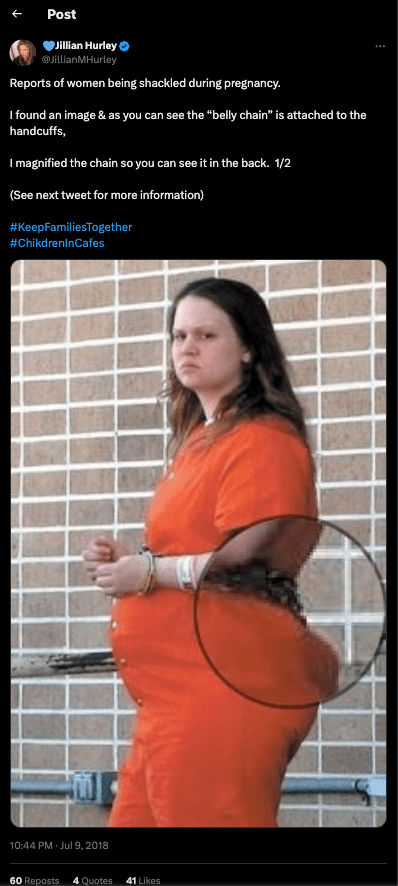
Now picture this: you jolt out of sleep, feeling contractions, and think, “Oh no, I didn’t want this to happen here.” You crawl out of your bottom bunk, trying not to disturb the person sleeping above you. You get the attention of the correctional officer on duty and tell them that you think you’re going into labor. She rolls her eyes at you, puts you in a transfer cell, and says someone will be back later to take you to the hospital. After hours of breathing through contractions in the tiny room, another correctional officer comes in, handcuffs you, and takes you to the ambulance, where they shackle your ankles for good measure.5 After finally making it to the hospital room, one of the healthcare workers has the kindness to call your mother, who arrives quickly. However, the correctional officer standing guard at the door says it is against state policy to let her into the delivery room.5 After hours of laboring alone, one ankle shackled to the bed, you finally give birth to a daughter, who is whisked away for extensive tests before you can hold her. When the tests come back clear, you can finally hold her and awkwardly try to breastfeed, still shacked to the bed, in front of the correctional officers.

The second story seems like a nightmare. However, it is a reality for thousands of women every year. Many facilities require handcuffs, leg irons, and belly chains or belts on incarcerated women while they are transported to the hospital, even if they are in active labor.5 Many facilities keep at least some of these restraints on during the entire labor, despite the United Nations ruling that “instruments of restraint shall never be used on women during labor, during birth and immediately after birth.”7 Correctional officers are also required to be in the room, but in many facilities they are not required to be female.5 Unfortunately, this maltreatment does not start or end with labor. It begins during pregnancy, with lack of care and appropriate nutrition, and extends to postpartum treatment and separation of mother and child.

Approximately 2,000 women give birth in prisons annually, and 5-10% of women enter prison or jail pregnant.4 That is approximately 58,000 incarcerated pregnant women who need access to specialized care, prenatal diet, and accommodated living conditions.10 One study revealed that women who were given high-quality food experienced fewer complications during pregnancy and labor.11 Despite this, there are limits in jails and prisons on foods like fruits, vegetables, and milk; and multivitamins are not commonly prescribed.5 There are “no federal regulations on the minimum standards for nutrition in state prisons,” so the lack of quality food and prenatal vitamins for incarcerated pregnant women can be swept under the rug.12

For pregnancy-related accommodations in living conditions, most facilities at least require a pregnant inmate to have a bottom bunk. However, in over-crowded facilities, pregnant women end up on top bunks, or even sleeping on the floor.1 Pregnancy is already very physically demanding, so putting pregnant women in living conditions where their physical needs are not met could cause lifelong consequences for mother and child.

Beyond the women who are pregnant or give birth while incarcerated, one study indicated that 25% of incarcerated women are pregnant or gave birth less than a year before entering prison.8 Therefore, women who had a baby just before being incarcerated will most likely be separated from their newborn children. As for women who give birth while incarcerated, they are separated from their children only a few days after birth.2 A mother wants to bond and find comfort in her newborn, especially after going through the traumatic experience of chained labor. They are often denied this experience. One study that interviewed several incarcerated women who were separated from their children reported the mothers saying things like “it feels empty without him/her in my belly,” and “I want to get on parole so I can be a mom.”3 Despite the fact that incarcerated pregnant women usually are not given adequate care, many women in the study said that “everything was fine until I gave birth,” which truly revealed how devastating this child separation is for the mother.3

I want to get on parole so I can be a mom.

Unsurprisingly, the mental health of most incarcerated pregnant women or mothers deteriorates. As many as 80% of pregnant women in a correctional facility experience depression at some point.9 More specifically, postpartum depression is very prevalent, likely aggravated by the isolation from family and friends in the correctional facilities. Increased stress during pregnancy and the postpartum period, a lack of support, transfers between correctional facilities and hospitals, and separation from their child all contribute to maternal depression.The mother is not the only affected party, as children of incarcerated mothers are more likely to be anxious, depressed, and withdrawn, especially if separated from their mother during infancy or toddlerhood.6

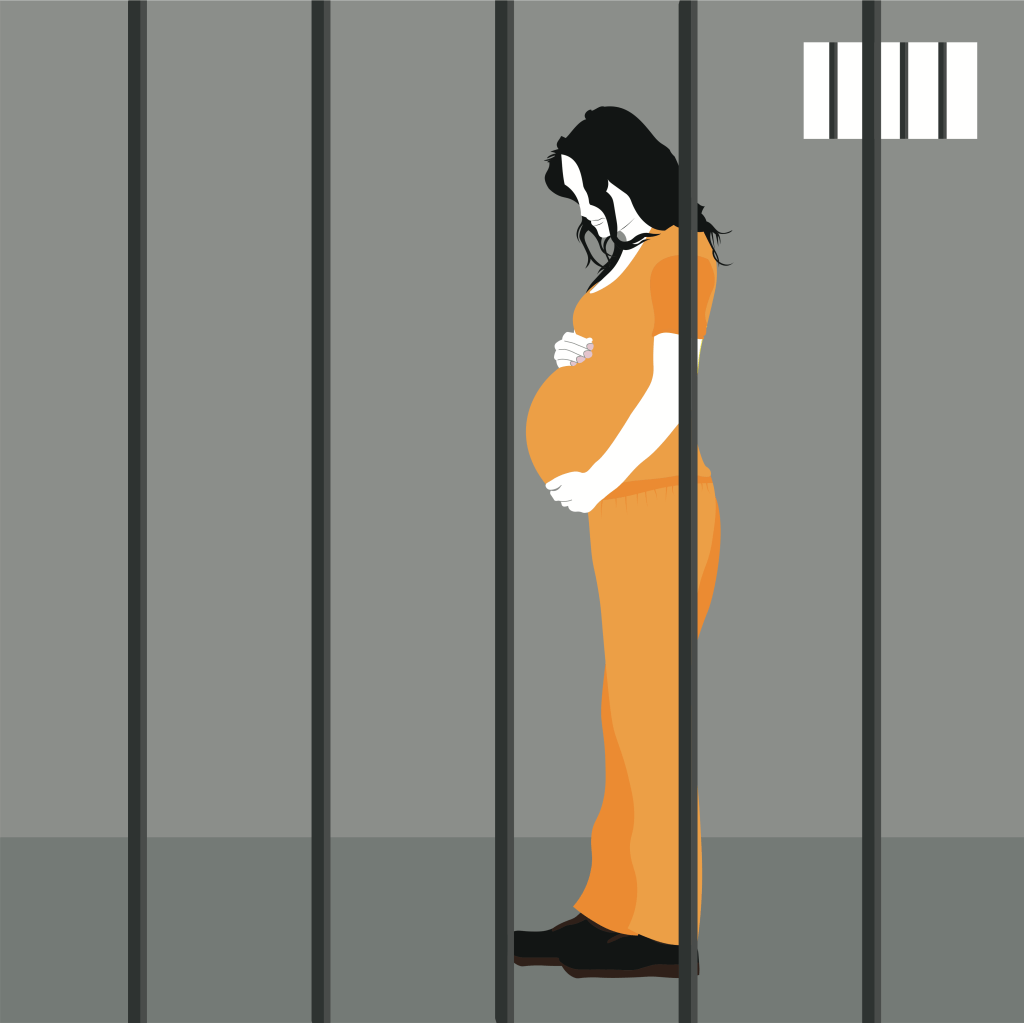
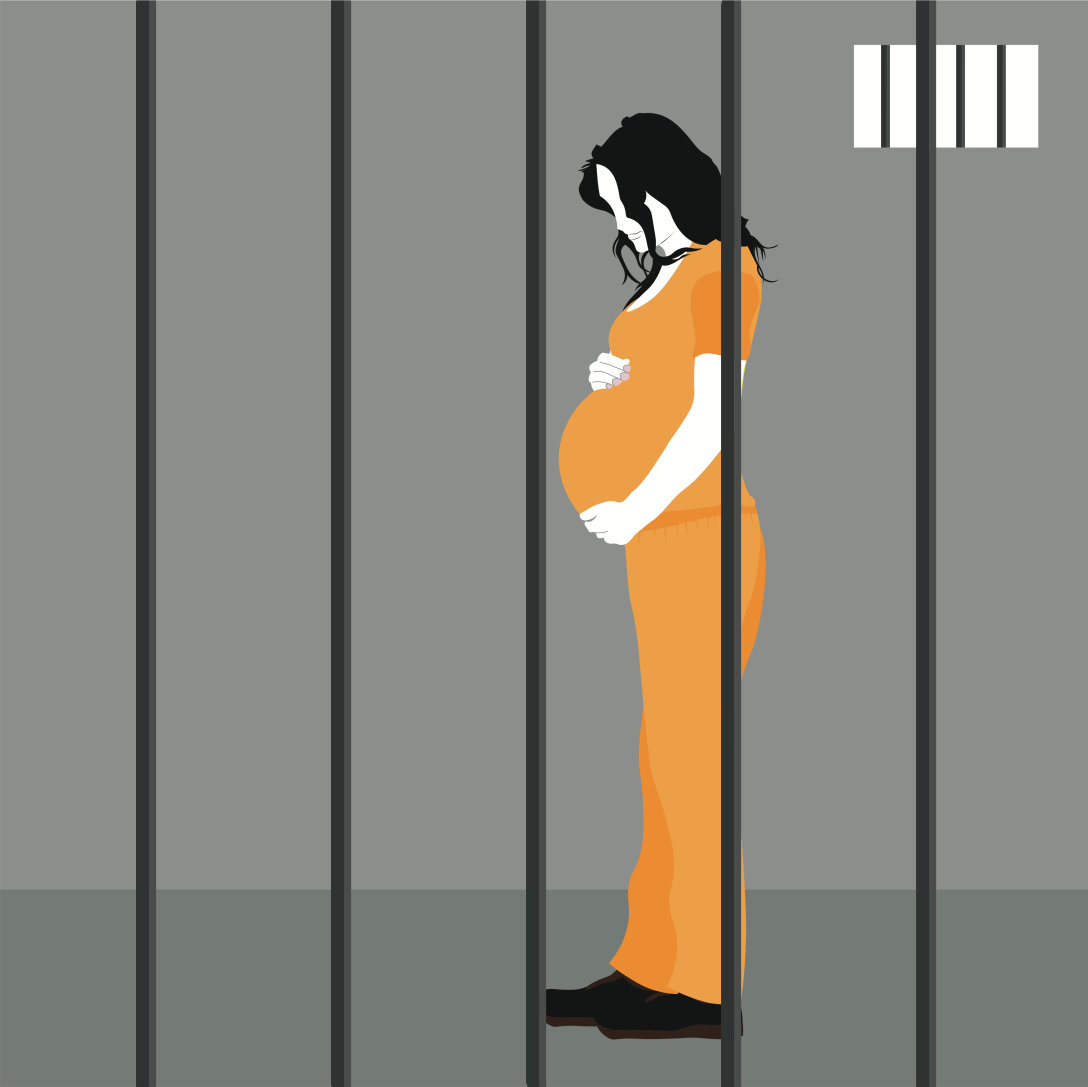
“A Pregnant Woman in Prison” Arts and Catfrs/Shutterstock.

Despite all of this, there is hope for a change in these disparities that has started with the creation of nurseries for incarcerated mothers. Nine states now have these so-called “prison nurseries,” in which mothers are able to serve time while being with their newborns.4 Prison nurseries are special housing unit inside the prison, where a mother can parent her baby alongside other incarcerated new mothers.13 The states with these programs already built include California, Illinois, Indiana, Ohio, Nebraska, New York, South Dakota, Washington, and West Virginia.13 There are also Community-Based Residential Parenting (CBRP) programs in Alabama, California, Connecticut, Illinois, North Carolina, Massachusetts, and Vermont.13 Unlike prison nurseries, CBRP programs are not located inside prisons. Instead, CBRPs are separate facilities, usually run by non-profits, that allow mother and child to live together under supervision.13 Children who spent their first 1-18 months in a prison nursery, rather than being separated, had much lower anxiety/depression scores as preschoolers.6 On the opposite spectrum, children who were separated from their incarcerated mothers showed a higher prevalence of insecure attachment (mistrust, avoidance, and anxiety that arises due to past interactions) towards their temporary guardians and mothers.6 Therefore, studies show that both prison nurseries and CBRP programs have very positive impacts on both children and mothers. These programs have introduced humane changes that have helped the welfare of incarcerated mothers and their children. However, more needs to be done. Including states’ prison nurseries and CBRP programs, only 14 out of 50 states provide mother-child incarceration/CBRP. Because such clearly positive results are seen when mothers and children can remain together, these facilities are needed in every state in the US.

Works Cited

  1. Amy Yurkanin. (2022, September 8). Pregnant women held for months in one Alabama jail to protect fetuses from drugs. Al. https://www.al.com/news/2022/09/pregnant-women-held-for-months-in-one-alabama-jail-to-protect-fetuses-from-drugs.html
  2. Carlson, J. R. (2018). Prison Nurseries: A Way to Reduce Recidivism. The Prison Journal. https://doi.org/10.1177/0032885518812694
  3. Chambers, A. N. (2009, December 18). Impact of Forced Separation Policy on Incarcerated Postpartum Mothers. Sage Journals. https://journals.sagepub.com/doi/pdf/10.1177/1527154409351592?casa_token=kxLokm6b5r8AAAAA:LuQJZAms5PK3NBTbBMsjwkuQz2t0c_ksxy2VH5xEPfn4Mz965jDd1KMUlfYEO83oViRGZApjfyPP
  4. Clarke, J. G., & Simon, R. E. (2013, September 1). Shackling and separation: Motherhood in prison. Journal of Ethics | American Medical Association. https://journalofethics.ama-assn.org/article/shackling-and-separation-motherhood-prison/2013-09#:~:text=Between%205%20and%2010%20percent,unacceptable%20in%20any%20other%20circumstance
  5. Ferszt, G.G., & Clarke, J.G. (2012). Health Care of Pregnant Women in U.S. State Prisons. Journal of Health Care for the Poor and Underserved 23(2), 557-569. doi:10.1353/hpu.2012.0048.
  6. Goshin, L. S., Byrne, M. W., & Blanchard-Lewis, B. (2014). Preschool Outcomes of Children Who Lived as Infants in a Prison Nursery. The Prison Journal, 94(2), 139–158. https://doi.org/10.1177/0032885514524692
  7. Hall, R. C. H., Friedman, S. H., Jain, A. (2015, September 1). Pregnant women and the use of corrections restraints and Substance Use Commitment. Journal of the American Academy of Psychiatry and the Law. https://jaapl.org/content/43/3/359
  8. Kotlar, B., Kornrich, R., Deneen, M., Kenner, C., Theis, L., von Esenwein, S., & Webb-Girard, A. (2015). Meeting Incarcerated Women’s Needs For Pregnancy-Related and Postpartum Services: Challenges and Opportunities. Perspectives on Sexual and Reproductive Health, 47(4), 221–225. https://www.jstor.org/stable/48576281
  9. Mukherjee S, Pierre-Victor D, Bahelah R, Madhivanan P. Mental health issues among pregnant women in correctional facilities: a systematic review. Women Health. 2014;54(8):816-42. doi: 10.1080/03630242.2014.932894. PMID: 25190332.
  10. Pregnancy and childbirth in prison. Penal Reform International. (2022, August 24). https://www.penalreform.org/global-prison-trends-2022/pregnancy-and-childbirth/ 
  11. Rebecca J. Shlafer, Jamie Stang, Danielle Dallaire, Catherine A. Forestell, and Wendy Hellerstedt.
  12. Best Practices for Nutrition Care of Pregnant Women in Prison. Journal of Correctional Health Care. Jul 2017.297-304. http://doi.org/10.1177/1078345817716567
  13. Shlafer, R. J., Stang, J., Dallaire, D., Forestell, C. A., & Hellerstedt, W. (2017). Best practices for nutrition care of pregnant women in prison. Journal of Correctional Health Care, 23(3), 297-304.13) Women’s Prison Association (Ed.). (n.d.). Mothers, infants and imprisonment – prison legal news. Prison Legal News. https://www.prisonlegalnews.org/media/publications/womens_prison_assoc_report_on_prison_nurseries_and_community_alternatives_2009.pdf

Image Reference

“A Pregnant Woman in Prison.” By Arts and Catfrs/Shutterstock. https://www.shutterstock.com/image-vector/pregnant-woman-prison-vector-image-2119331099. Used under License.