
By Halee Lott
The Count of Monte Cristo and The Three Musketeers are two books you are probably familiar with. But what most people don’t know is that the author of these two very famous books, published in 1846 and 1844, respectively, is Black. If you gasped, then you were not the only one. I didn’t even know until a couple of months ago.
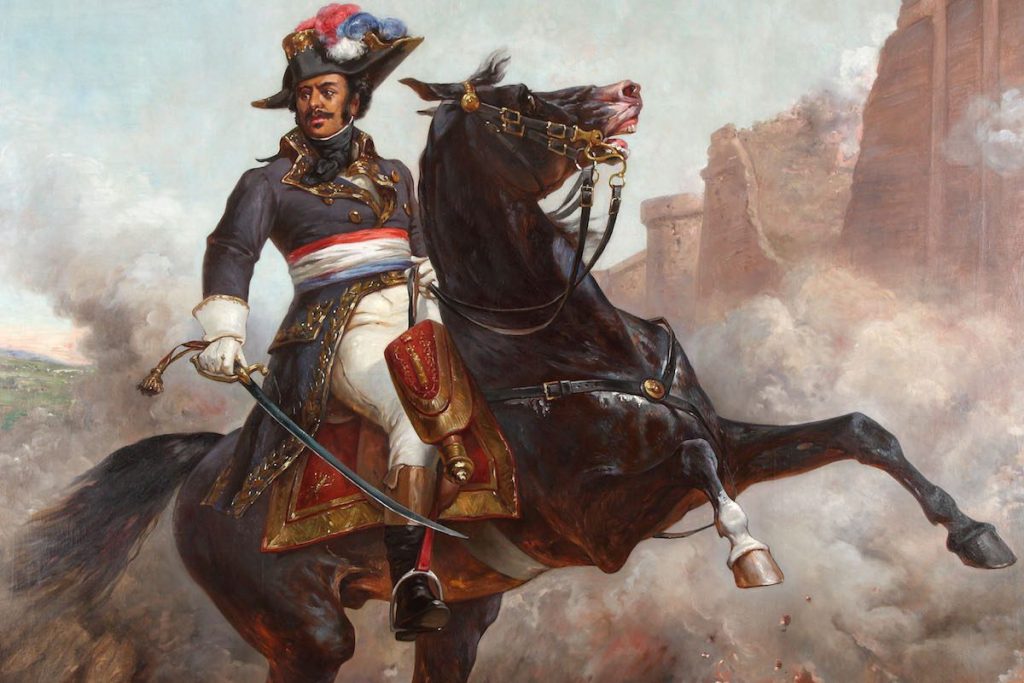
The author of these books, plus a whole collection, is Alexandre Dumas. 1He was a man of African descent who grew up in the aristocracy of France. Most French people did not know who he was until he was transported into the Pantheon de Paris in 2002 during a televised funeral. Why was Dumas’ identity hidden for so many years? The answer may never be clear, but one historian, 2Claude Schopp, revived Dumas’s legacy by uncovering archives from his life. Alexandre Dumas’s tale was like many other French aristocrats of the time, filled with infidelity, dozens of mistresses, illegitimate children, and money. The most surprising thing about digging into Dumas’s past was not the multiple women and bastard children, but his father, who has a forgotten tale of his own.
Before diving into the Dumas family story, let’s get to know our characters. Starting with the beginning, Alexandre Dumas’s father, 3Thomas-Alexandre Dumas, was born in 1762 in Jérémie, Saint-Domingue, present-day Haiti. He was the son of a plantation owner, Alexandre-Antoine Davy de la Pailleterie, and a Black slave, Louise-Marie Cessette Dumas. Therefore, under the law, Thomas-Alexandre Dumas was a mixed-race individual. It almost makes you wonder…was Thomas-Alexandre a product of rape? Considering how common it was during those times, Louise-Marie was most likely raped by the white plantation owner. This idea further cements when you realize that Thomas-Alexandre’s father left his mother behind in Saint-Domingue, when they left for France.
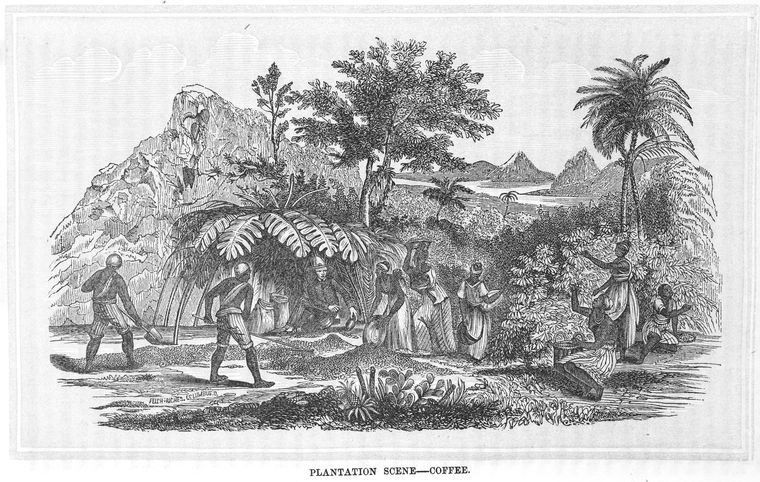
3Thomas-Alexandre left San Domingo at eighteen in 1780 with his father to visit France. Thomas-Alexandre’s father was an important member of the Normandy family and held many positions in the French court. The people he associated with were curious about the “tan giant” that walked among them. Here are first-hand accounts of the French seeing Thomas-Alexandre Dumas for the first time, “…this five feet nine giant with tan complexion, with velvety brown eyes, with white teeth, and whose hands and feet have a feminine slenderness which reveal his aristocratic origin, walks always in the front and makes quite an impression…”. Apparently, Thomas-Alexandre’s appearance was alluring and mysterious to the French. I mean, who wouldn’t be intrigued?
“…this five feet nine giant with tan complexion, with velvety brown eyes, with white teeth…”
In 1786, Thomas-Alexandre joined the army using the name Alexandre Dumas, taking the name of his deceased mother. While men with a noble rank usually entered as an officer, Thomas-Alexandre entered at the lowly rank of a private. 4Even though Dumas was a mixed-race individual in colonial France, and wanted nothing to do with his aristocratic heritage, he never needed an edge. In September of 1792, Thomas-Alexandre became second Lieutenant. The day after that he was promoted to First Lieutenant. In February of 1793, he became a Lieutenant Colonel, and then in July of that year, he was appointed Brigadier-General of the Army of the North. Then in September of 1793, he was promoted again to General of a Division of the army. Five days later, he was commissioned General Commander-in-Chief of the Army of the Western Pyrenees. In case you weren’t counting, that’s six promotions in a little over a year! Why isn’t this guy in the history books again? And I haven’t even gotten to the most jaw-dropping part of the story yet. In the fall of 1796, Dumas met a young general from Corsica, Napoleon Bonaparte. This started Dumas’ journey to becoming one of Napoleon’s most trusted generals.
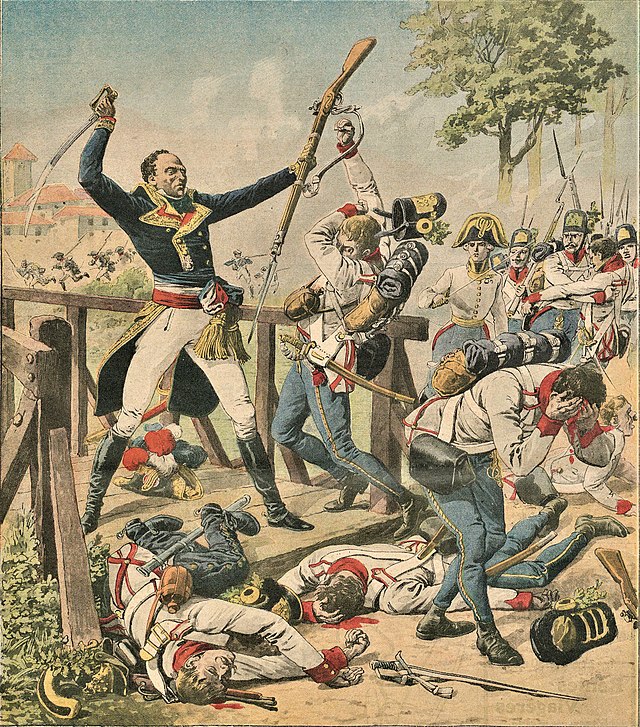
After the two generals met for the first time, there was tension between them. General Dumas stood taller than General Bonaparte, and many people thought Dumas was the commander in charge. Dumas really proved his worth to Napoleon Bonaparte the next year when he “single-handedly” drove back a squadron of Austrian troops in northern Italy. The French began to call him “the Horatius Cocles of the Tyrol”, after a hero who saved ancient Rome. While Dumas was Napoleon’s greatest general, the pair never got along. So much so, that when Thomas-Alexandre died, 3-year-old Alexandre and his mother were left with nothing because of Napoleon’s spite. Thomas-Alexandre was a great general in the French military, and his adventures were the inspiration for some of his son’s writings. With a story like Thomas-Alexandre’s, it would be hard not to be an inspiration.
 The Mary Bruce Project